Gigi Kuo Back to work

Building an AI-assisted picture book studio for toddlers

One Designer + One AI = A Small Publishing House

The Island Soundscapes story player on desktop: a watercolor farm scene with a blue dinosaur, and the control bar along the bottom
Island Soundscapes homepage on mobile, featuring The Watermelon on the Big Truck

Timeline

2026

Role

Founder & sole designer
Story, illustration, sound, build

Tools

Claude (site code & story editing), ElevenLabs (narration), hand-drawn illustration

Summary

I set out to see how far one designer could go with AI as a production partner. AI got me from zero to 80% faster than any team I've worked with. The last 20% (the art, the pacing, the cultural detail) was still mine to fix, so I built frameworks that teach the AI to follow it.

What if every child could get a story about exactly what they love?

The first idea: a story generator

Toddlers have strong favorites. Dinosaurs. Big trucks. A farm full of animals. My first concept was a platform where a parent types in a few of them, picks a lesson like honesty, and gets a brand-new story.

The idea was simple: one platform and endless stories, with no one waiting for a writer.

Characters

Hand-drawn green flying dinosaur
Dinosaur
Watercolor red truck
Big truck
Painted farm animals running out of a barn
Big farm

Lesson

Honesty
Story page: a blue dinosaur on a farm with a red truck, cows, a pig, a goat, a donkey and two geese

The original concept: favorites + a lesson → a generated story

Is anyone already doing this?

Yes. Here is how my first idea compared.

Feature Sleep appsCalm logoCalmHeadspace logoHeadspace Kids librariesEpic logoEpicYouTube Kids logoYouTube KidsKhan Academy Kids logoKhan Kids My first ideaIsland Soundscapes logoMine
Personalised to the child ✗✗●
Human-made illustration ✗●●
Taiwan settings ✗✗●
Built for bedtime ●✗●

● yes   ◐ partly   ✗ no. Based on each product's public description. App icons belong to their respective owners.

Sleep apps

Own bedtime, but mostly as audio. No picture book.

Kids libraries

Plenty of books, but made for learning, not for winding down.

My first idea

A platform where parents type in their child's favorite things and get a brand-new story made just for them. The only one that did this at the time.

The First Wall: Who Pays for the AI Tokens?

Watercolor illustration of a hand dropping a coin into a pink piggy bank

Every story has a cost

Every generated story uses AI credits. Either the platform absorbs the cost, or every parent brings their own account. The first option doesn't scale for a solo founder. The second makes onboarding painful for parents who just want a bedtime story.

Option A

I cover every user's AI usage

✗ Cost grows with every user

Option B

Parents connect their own AI account

✗ Big hurdle before the first story

The pivot

Validate the content before the platform

Instead of building infrastructure for a product nobody had tried, I made three finished stories myself, the kind I'd want to read to a child at bedtime. If the stories didn't land, a generator wouldn't save them. If they did, I'd have a quality bar any future generator had to meet.

The gap: curated, not generated

Anyone can generate a story. No one can generate a place.

A real place, hand-drawn art and a sleepy pace are what a generator can't copy.

It began as a place to breathe: rain between the valleys, a small tea life, the Pacific between me and Taiwan. I wanted people to wander the island by sound and find calm in the mountains, the sea and the rain. The name, 島嶼聲景 (Island Soundscapes), came before any story did.

Layered blue mountains and green tea hills in central Taiwan

Who

Families far from home

Chinese families in Taiwan and abroad, reading to a child at bedtime.

Blue hydrangea blooms floating in a shallow bowl of water, with light rippling across the surface

Ages

Sound first

0–3 listen and look. 3–6 follow the story and the words.

A Taiwan shopfront with a Chinese signboard reading 清隆帆布行, founded 1860

Why bilingual

Chinese stays Chinese

Taiwan's own words and places, with English beside them for kids growing up away.

How might one designer ship like a publishing house, without letting AI replace the craft?

AI to Scale, Not to Replace

I split the work by what each side does best. AI handled what is slow and repetitive. I kept what makes a picture book worth reading twice.

Story

AI drafts & edits text

Me plot, rhythm, final word

Illustration

Me every image hand-drawn

No AI-generated art

Narration

AI ElevenLabs voice

Me pauses, tone, pacing

Website

AI writes the code

Me design, structure, reviews

Illustration stays human

I drew every illustration by hand. That was a deliberate line. AI can help one person do the work of a studio, but the art is what a child actually looks at, and I didn't want to hand that over.

Watercolor study
Pencil sketch of a turtle with a watercolor shell
Pencil sketch
Painting the shell
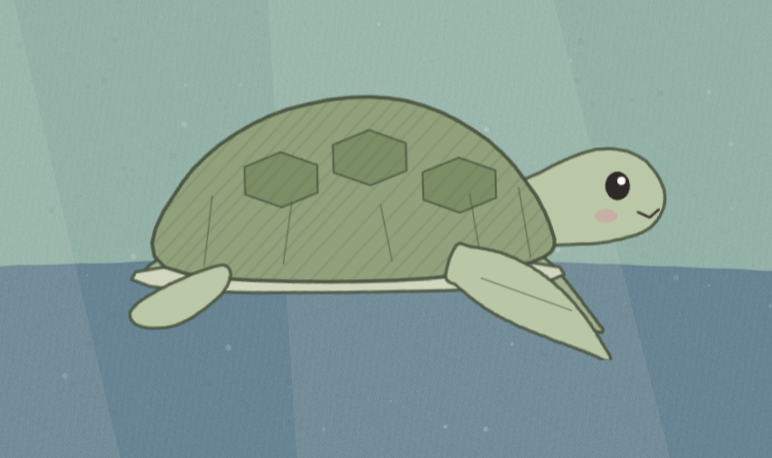
The final illustration of the sea turtle as it appears in the book
Final illustration

From pencil and watercolor sketches to the final illustration for Little Green Turtle Goes Home, all drawn by hand.

AI gave me speed.

It couldn't tell me whether the story was right.

Where I Overruled the AI

Claude produced code and first drafts in hours. But the drafts were generic, and generic is exactly what a picture book can't be. Every story had the same conflict in its structure: AI brought speed, and I had to bring the cultural accuracy and the understanding of small children.

Terraced tea garden on a misty Taiwanese mountainside

Cultural detail

"An Asian temple" isn't a place

The stories are set in Taiwan. AI wrote temples, food, and streets that could be anywhere in East Asia. I rewrote them from memory: the sounds, the smells, the small rituals that make a place feel real.

Age fit

Two ages, two rhythms

AI wrote every draft the same way, for no one in particular. My books have two readers. Toddlers (0–3) need short lines, repetition, sounds to copy, and one idea per page. Young children (3–6) can follow cause and effect and a simple plot. I reshaped each draft to the rhythm of the child it's for.

AI draft · one size for everyone

The big red truck rumbled down the winding mountain road, carrying a heavy watermelon to the village market before the sun went down.

Reshaped · ages 0–3

Big red truck.
Rumble, rumble.
Big red truck.
Rumble, rumble.

Reshaped · ages 3–6

The big red truck rumbled up the hill. A big green watermelon rode in the back. Where were they going?

Voice

Machine narration sounded off

The text-to-speech read every line in the same flat tone and rushed through the moments that needed space. A bedtime story told like that doesn't help a child wind down.

Oil painting of a green valley town seen through sweeping trees, with farm fields, a dirt road and three factory chimneys on the horizon
Chen Cheng-po (陳澄波), Overlooking Zhuluo City (展望諸羅城), oil on canvas, 1934. Collection of Chiayi City Museum of Art

Cultural translation

Specific places, universal moments

Many of my readers are families raising kids in the US, far from Taiwan, so I didn't want the books to read like a travel guide. The setting stays specific to Taiwan, but every story is built on something any toddler knows: rain on the roof, a grandparent's hand, the sounds of a busy street before bed. Readers don't need to know the place to recognize the feeling, and the detail is what makes the book feel worth reading.

That's also why the painting above is here. Chen Cheng-po painted Chiayi, his own hometown, and local artists like him are a gentle way to introduce children to the culture and history of home, and to spark an interest that lasts beyond the book.

Website story player control bar

AI built the first player quickly, but it was built like a web page, not a book. I redesigned it around one painting and one short passage per page, with large type a parent can read in a dim room.

Before

First version of the story player control bar, generated by AI

After

Redesigned story player control bar

Fix It Once, Then Make It a System

Fixing every draft by hand didn't scale. So each time I corrected the AI, I wrote the rule down. Those rules became my own Claude Skills: written guidelines the AI loads before it touches a new story, so my judgment is built in from the first draft.

Skill 01

Storytelling style

Short lines, repetition, sounds to copy, and an ending that echoes the opening. Nothing scary, no abstract numbers.

Hand-drawn sheep and cow sitting on a hill, saying "baa baaa" and "moo mooo"
  • Rule 01

    Keep lines short

    Very few words. Short phrases.

  • Rule 02

    Add repetition

    Say things again. Repeat words and actions.

  • Rule 03

    Make fun sounds

    Copy sounds you hear. Loud noises, silly sounds.

  • Rule 04

    Echo the opening

    Finish the way you started, with a cheerful ending.

Skill 02

Visual guideline

One soft watercolor look, a fixed palette, and one main tap per page, so every new book sits on the same shelf.

Show the full visual spec

Interface · Palette D

Colour & type

Colour tokens (left light / right dark, contrast on paper)

--desk · page

#EAE6DC / #111519

--paper · cards

#F6F3EC / #1C2227

--ink · text

11.0:1 / 12.1:1

--ink-soft · captions

6.6:1 / 7.9:1

--accent · sage

6.3:1 / 10.1:1

--chip-edge · borders

#7D8571 / #5E6B57

Gingham green #A6B88C is only 1.9:1 on cream: decoration only. Text never sits on gingham; it gets a paper chip, as in the header.

Typefaces

Story text
Huninn

月亮慢慢爬上來,聽見海浪聲。

Interface
Noto Sans TC

Continue · Previous · Next · Seen

English
Source Serif 4

The moon climbs slowly over the island.

Max two weights and three sizes per screen. Body line height 1.8–2, headings 1.3.

Interface · Components

Layout & controls

Buttons & status

Play Next page ✓ Seen

Touch targets ≥ 40px. Focus ring 3px, offset 2px (shown on “Next page”). States change icon and label, never colour alone.

Spacing (multiples of 4 / 8)

8
12
16
24
32
48

Sections ≥ 32 apart, card padding 12–16, buttons 8–12 apart.

Bookshelf cards

The Guanyin Who Hears

24 pages · 6 min

Little Green Goes Home

Tap book · ages 2–4

New book

5–8 min

Thumbnails 600:440, radius 10px. 2 columns on phone, 3 on tablet, 4–5 on desktop. Progress bar sits below the art, never on it.

Illustration · D2 ink line & wash

Picture-book pages

Sample picture-book page: a parent and child outside Longshan Temple Keep top-left clear (close button) 8% each side: page arrows
Ratio
600:440 (15:11), ideally 1500×1100
Format
WebP, JPG or PNG
Text
No story sentences in the art; signs and sound words are OK
Page 1
Also the cover: big subject, simple background, readable at 300px

Book palettes (house style fixed, colours chosen per book)

Misty D2 · default for bedtime books · pink in small touches only

Mist

#DCE1E3

Misty sky

#A9BCC3

Moonlight

#F3EBD2

Celadon

#9CC9BD

Sea teal

#79A398

Slate blue

#597F95

Sand ×3

#E6DDCB

Sage

#87957D

Olive

#908F76

Warm brown

#755F52

Dusty pink

#D99A9E

Outline

#3F4A35

The Watermelon Truck · daytime and playful · brighter, more saturated

Grass

#5F8A38

Field

#BCC286

Dino blue

#4F78B6

Lake

#7699B4

Dusk indigo

#4F5081

House style: brushwork

  • Shaky coloured-pencil outline, dark brown or olive.
  • Translucent watercolour layers, paper grain.
  • No pure black, neon or hard vector edges.
Outline
Wash
Grain

Skill 03

Story length

At bedtime a child's attention and nerves slowly settle. Too long overstimulates; too short loses the ritual.

50–200

characters per story

Reading time
2–4 minutes
Pages
10–16
Story focus
Soothing sounds, rhythmic repetition, simple sensory experience

Bedtime rhythm

Read 20–30% slower than normal speech.

Leave a beat on every page for the child to look at the picture or listen to a sound.

Skill 04

Narration

The same went for the voice. I wrote down what a good read-aloud needs (where to pause, where to slow down, which words to stress) and turned it into a script framework. Every new narration now goes through it before it reaches the voice model.

Before: raw text

Wow, what a bright light! Little Green is going the wrong way. Can we turn off the light?

Read flat and fast, with no room to answer

After: framework applied

[amazed, bright] Wow, what a bright light!
[worried, slower] Little Green is going the wrong way.
[pause 2.0s]
[gentle, rising, asking] Can we turn off the light?

Same voice, with room before the question

  • A smiling baby with a bow beside a pause icon

    Rule 01

    One idea per line, then pause

  • A smiling baby with a bow listening to sound waves

    Rule 02

    Slow down on sound words so kids can repeat them

  • A smiling baby with a bow and a question mark

    Rule 03

    Leave space after a question for the child to answer

The Final Result

Island Soundscapes: a bilingual picture book site where every story is a place in Taiwan you can hear.

Visit the live site

01 · Curated library

A small shelf that only grows with stories worth keeping

A small, hand-finished collection. Each story is set in a real corner of Taiwan, and new ones join the shelf as they pass the same quality bar.

  • The Watermelon on the Big Truck cover

    The Watermelon on the Big Truck

    Bedtime story about honesty · ages 3–6

  • Little Green Turtle Goes Home cover

    Little Green Turtle Goes Home

    Tap-along book · 10 pages · ages 2–4

  • The Great Boba Escape! cover

    The Great Boba Escape!

    Tap-along book · 10 pages · ages 2–4

  • Guanyin Hears Every Sound cover

    Guanyin Hears Every Sound

    Narrated story at Longshan Temple · 6 min read · ages 6–9

02 · Sensory play

A book that answers back

For ages 0–3. Toddlers tap the page to make things happen: a turtle swims, a boba pearl rolls away. Every tap teaches cause and effect and builds fine motor skills.

Try it: tap the page.

Misty tea terraces in the Taiwan mountains

03 · Soothing audio

Story + white noise = a calm child

When the story ends, the soundscape keeps going. Rain, waves, or temple bells carry the child from listening to sleeping, so the parent doesn't have to stop and switch apps.

04 · Designed for bedtime

Made for a dark room and a sleepy child

Most reading happens on a phone, next to a child who is supposed to be falling asleep. So the site follows the phone's dark mode, speaks Chinese or English, and plays temple bells, waves, or a night market under the story.

  • ✓ One-tap switch: 中 / EN
  • ✓ Light and dark themes at WCAG 2.2 AA
  • ✓ Rain, waves and bells that hush into sleep
The Watermelon on the Big Truck story page on a phone, in dark mode

05 · Bedtime pacing

The voice slows down, so they can too

Parents can slow the narration down. At bedtime a slower, softer voice helps the child settle instead of getting excited.
Early Signals

The four stories are live as a test of the content, before any generator gets built.

"I watched it with my son, and he loved it ❤️ As parents, we found it educational, heartwarming, and soothing too."
— Parent, via Instagram
"The illustrations are so adorable! Thank you for making this. I think it's going to bring warmth to a lot of people ☀️"
— Parent, via Threads

How It Could Pay for Itself

The MVP is free on purpose. These are the options I'm weighing for later, in the order I'd try them.

1 · Donation

Lowest risk

Khan Academy Kids runs this way. It fits a small catalog and keeps the story player clean.

2 · Membership

Best long-term fit

New stories every month, extra languages, offline play. Subscriptions are how most kids' reading apps earn, and they cover the cost of narration and illustration.

3 · Ads

Hardest for kids

Apple's Kids category bans third-party ads, and child privacy rules limit targeting. If I use ads, they go on parent-facing pages only, never inside a story.

4

Illustrated, narrated stories shipped

1

Repeatable system

What I Learned

What AI is great at

  • →Getting from zero to 80% in a fraction of the time
  • →Writing working code for a solo builder
  • →Producing drafts to react to, not start from scratch

What still needs a designer

  • →The art, the rhythm, and the details that make it feel true
  • →Knowing the audience (here, a two-year-old at bedtime)
  • →Turning one-off fixes into frameworks AI can follow

The real output of this project isn't four books. It's a repeatable system: AI handles volume, and the frameworks I wrote carry my judgment into every new story. That's how one person runs a small publishing house.

You may also like